Browsing Levels of Care: When Dementia Care Requires More than Assisted Living
Business Name: BeeHive Homes of Collierville
Address: 1368 Wolf River Blvd, Collierville, TN 38017
Phone: (901) 286-3455
BeeHive Homes of Collierville
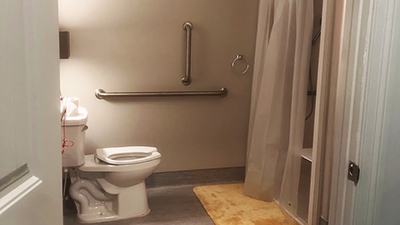
At BeeHive Homes of Collierville, Tennessee, we offer the finest assisted living and memory care experience available in a cozy, comfortable homelike 21 bedroom setting. Each of our residents has their own spacious room with an ADA approved bathroom and shower. We prepare and serve delicious home-cooked meals three times a day every day. We maintain a small, friendly elderly care community. We provide regular activities that our residents find fun and contribute to their health and well-being. Our staff is attentive and caring and provides assistance with daily activities to our senior living residents in a loving and respectful manner. We invite you to tour and experience our assisted living home and feel the difference.
1368 Wolf River Blvd, Collierville, TN 38017
Business Hours
Families often come to assisted living with relief. Meals are managed, medications are supervised, there is a call pendant for emergencies, and social activity returns. For numerous older grownups dealing with early or moderate dementia, that structure suffices for a while. Then something shifts. A late evening exit through a side door, a fall on the method to the bathroom, an abrupt suspicion that personnel are taking, or a refusal to bathe. The care that when felt proper starts to feel thin.
Knowing when dementia care requires more than assisted living is not about a single event. It is about pattern, predictability, and the gap in between what a person requires and what the setting is created to provide. The choice seldom lands easily on a calendar date. It constructs, one little adjustment at a time, up until the adaptations themselves become unsustainable.
What assisted living does well, and where it stops
Assisted living was developed to support older grownups who can still structure the majority of their day however require assist with specific tasks. Staff cue residents to take tablets, escort to meals, and stand by for showers. The environment highlights autonomy. Doors are open, schedules are flexible, and citizens come and go for family getaways. For somebody with mild dementia who benefits from routine but is not at high danger for getting lost or hazardous habits, this works.
The limits appear when cognitive signs move from lapse of memory to impaired judgment. A resident who forgets Tuesdays is workable. A resident who thinks the emergency alarm is an individual message to leave the building at 2 a.m. Is more difficult to support without specialized staffing and environmental controls. The difference is not a moral judgment on the resident. It is an inequality between need and design.
Assisted living staff are typically ratioed to provide periodic support, not continuous observation. A nurse might be on website for part of the day, with medication service technicians and resident assistants covering most hours. That model assumes most residents can be left alone for stretches without high danger. In innovative dementia, the dangers condense into the minutes when no one is watching.
Signs that requires are growing out of assisted living
I keep a mental stock of red flags. None by themselves proves a relocation is needed, and all of them require context. However when 3 or four are present constantly, it is time to consider a memory care home or a devoted memory care area within a larger community.
- Repeated elopement or exit seeking that beats simple door alarms, visual hints, or redirection
- Escalating habits like sundown agitation, hostility throughout care, or deceptions that interrupt safety for the resident or neighbors
- Weight loss, dehydration, or missed out on medications in spite of reminders and delivered meals
- Nighttime wakefulness that leads to day sleeping and unmanageable schedules, stressing both personnel and resident
- New incontinence integrated with resistance to toileting or hygiene, leading to skin breakdown or reoccurring infections
In practice, these appear in spirals. A resident begins to roam at sunset, misses out on meals, slims down, and ends up being irritable. Irritation leads to refusal of showers, which results in a urinary tract infection, which gets worse confusion and roaming. Simply adding another check by assisted living staff can not constantly break that cycle because the origin is illness progression, not a single fixable gap.
When security becomes a shared responsibility
Wandering gets attention since it is simple to think of worst case results, however lots of families undervalue the compounding impact of smaller safety concerns. For instance, kitchenettes in assisted living often consist of a microwave. An older adult with middle phase dementia can mistake the microwave for a safe storage cabinet and place metal within, or reheat a sealed plastic container until it contorts and leakages. Another common pattern is well intentioned neighbors swapping medications or food. Personnel in assisted living supervise as they can, yet they are not designed to preserve line-of-sight monitoring.
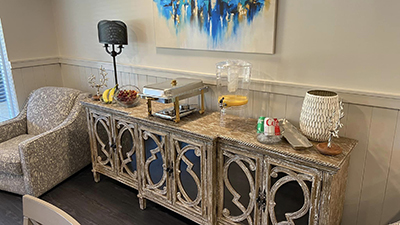
Memory care moves the default. Doors are secured with delayed egress, outdoor area is confined however inviting, and cooking area access is managed. More important than locks, the culture is developed around expecting cognitive symptoms. Staff are trained to see hands and eyes, not simply wait for call lights. Activity programming is staged throughout the day to capture the late afternoon restlessness that many homeowners feel.
Behavioral signs that evaluate the edges
I as soon as worked with a retired instructor who had been the social center of her assisted living dining-room. Over twelve months, her Alzheimer's disease progressed from moderate lapse of memory to persistent deceptions. She thought her child had actually been changed by an imposter. Initially, staff could redirect with humor and photos. Later on, the misconceptions bled into mealtimes. She guarded her plate, accused tablemates of poisoning her soup, and pressed a server who tried to clear dishes.
Assisted living can handle episodic behaviors. The challenge is frequency and strength. When a resident requires two individual help for many individual care because of resistance or worry, ratios bend. When neighbors become fearful or prevent the dining room, neighborhood life frays. A memory care home expects these habits. Personnel plan care with methods like step-by-step cueing, hand under hand assistance, and back short intros that reduce viewed danger. The physical space is quieter, with fewer triggers like overhead announcements or crowded corridors. Those small ecological changes matter when someone's nerve system is on alert.
Clinical intricacy and comorbidities
Dementia hardly ever travels alone. Diabetes, cardiac arrest, COPD, and chronic kidney disease often ride together with. Early on, these conditions can be managed with routine vitals, organized pillboxes, and prompt refills. Later on, the cognitive load of handling signs surpasses what reminders can do. A resident might drink very little because they no longer recognize thirst, sending blood pressure and kidney function into hazardous zones. Or they may cough quietly through the night due to the fact that they forgot how to use an inhaler.
Assisted living medication services are generally developed around oral medications on a schedule. Insulin titration, as required nebulizer treatments, and close observation for goal need more nursing oversight. Lots of assisted living communities can generate home health or hospice to layer assistance, which can stretch the practicality of staying. That works until needs become continuous instead of periodic. Memory care communities within bigger neighborhoods frequently have greater nurse existence, in some cases 24 hours, and tighter coordination with checking out medical providers. It deserves asking directly about nurse coverage by hour, not simply by title.
What modifications when you transfer to memory care
A memory care home is not merely assisted coping with a locked door. The best ones look various on function. Hallways are shorter. Lighting is even and without glare. The kitchen area smells like baking in the afternoon due to the fact that the team depends on aroma to hint cravings. Activities take place in loops instead of set blocks, so someone who can not participate in at 10 a.m. Can join at 10:20 without feeling late.
Staffing tends to be much heavier, with smaller sized resident groups appointed to each caretaker, which permits personnel to find out individual rituals. For one resident, brushing teeth had to come after the second sip of early morning coffee. For another, a bath was only tolerable after music from the 1960s filled the space. Those details are not fluff. They are scientific tools in dementia care, and they are hard to provide at scale in a conventional assisted living setting.
Medication administration shifts from tips to observation. A resident might pocket pills in assisted living without anyone noticing till the weekly count is off. In memory care, personnel watch to confirm swallow, provide one pill at a time, and use applesauce or pudding judiciously. Gradually, clinicians might simplify routines by deprescribing inessential medications, which decreases danger of interactions and side effects. This takes coordination amongst the medical care clinician, memory care nurse, and frequently a specialist pharmacist.
How to check out the inflection points
Families often tell me they feel like they are "quiting" by moving to memory care. In practice, the relocation is frequently an investment in what matters most. If the goal is maintaining dignity, comfort, and minutes of happiness, then an environment that decreases triggers and takes full advantage of effective engagement is not a retreat. It is a strategy.
The clearest inflection points are repeated, unresolvable dangers and consistent distress. A single small fall does not mandate a move. Three unwitnessed falls in a month, paired with nocturnal roaming and missed medications, suggest the existing setting can not compensate reliably. Likewise, repeated 911 calls or frequent transfers to the emergency department are an unmistakable signal that bandwidth is surpassed. Each ambulance trip speeds up decrease. Memory care teams can often deal with minor infections, dehydration, and agitation in location with physician oversight.
Money, contracts, and the great print
Care decisions live in the real life of budget plans and advantages. Assisted living is often private pay, with a base lease and tiered service fees as requirements increase. Memory care homes follow a comparable structure but at a higher baseline because of staffing and ecological expenses. Month-to-month costs differ widely by area, but the delta in between assisted living and memory care can run 10 to 30 percent.
Read the service plan and the residency arrangement line by line. Search for language around "2 individual assist," "behavioral management," and "awake over night staffing." Some assisted living communities reserve the right to release with 30 days notice if needs go beyond scope. Others operate a continuum on the very same campus and can use an internal transfer. If Veterans advantages, long term care insurance, or state Medicaid waivers become part of the strategy, ask straight how they use to memory care. I have seen families surprised when a policy that covered assisted living room and board did not cover behavioral care add ons.
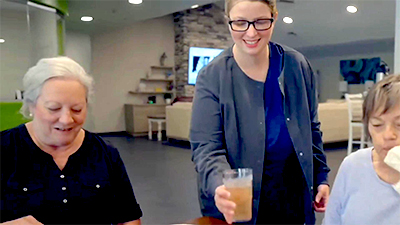
Planning a transition without blowing up trust
Moves are hard for individuals with dementia. Too much modification at once can amplify confusion and distress. The best shifts are staged and familiar. Bring the very same quilt, lamp, and household photos. Reproduce the bedside table design so the watch and glasses sit exactly where the resident expects. If a favorite caretaker from assisted living can visit throughout the first week to alleviate morning routines, that small connection pays off.
Families often ask whether to tell the person about the move in advance. There is no single right answer. For some, steady orientation assists. For others, anticipation fuels stress and anxiety. I lean toward easy truth in gentle language on the day of the move, anchored in safety and convenience. You might state, "We are going to a new place where your team can aid with the nights and make sure meals feel good again." Arguing realities when somebody is distressed rarely assists. Providing a meaningful next action does. "Let's have tea in your new chair, then we can see the garden."
A brief case study
Mr. L was 84, a retired engineer who prided himself on repairing things. In assisted living, he invested afternoons walking the halls, finding small concerns, and notifying upkeep. Over a year, his vascular dementia progressed. He started dismantling smoke alarm to "stop the beeping" even when they were peaceful, and he pried open a system door to "change the bad lock." Personnel attempted redirection and "jobs" that funnelled his need to tinker, like sorting hardware into bins. It worked up until it did not. He cut his hand reaching into a housekeeping cart for a screwdriver.
The family hesitated to move him, fearing he would feel constrained. In a memory care home with a protected yard, staff handed him safe jobs at a workbench built for the function. He "fixed" birdhouses and sorted big plastic nuts and bolts. His trips shifted from independent laps down the public corridor to purposeful walks in the garden, with an employee joining for the very first few days until the pattern stuck. Occurrences dropped. He slept more regularly because late day agitation had an outlet. The relocation did not eliminate his illness, however it rebalanced danger and satisfaction.
Evaluating a memory care home like a pro
The tour is theater, but useful if you understand where to look. I prevent scripted concerns and take note of the edges. Who is out and about at 3 p.m., a traditional sundown window. Are there significant activities that are not group based, due to the fact that not everyone grows in a circle of chairs. How memory care do staff address locals they do not yet know by name. If a resident is calling out, does someone respond quickly with a calm voice or does the call echo down the corridor.
Ask to examine the last state study or evaluation report. Every community has citations. The pattern matters more than the existence. Repetitive issues around staffing, medication errors, or elopements deserve extra examination. Ask the director how they changed after the citation. Specifics beat platitudes. You want to hear, "We altered our 2 to 10 p.m. Staffing from 3 to 4 and re-trained on keeping an eye on exits every 20 minutes," not "We take safety very seriously."
Nonfacility options that can bridge the gap
Not every escalation means an immediate move. Some households can extend time in assisted living or in your home by adding targeted assistances. Adult day programs with dementia care knowledge offer structured activity and minimize daytime napping, which can enhance nighttime sleep. Personal duty aides who understand how to hint and speed care can decrease bathing fights. Home health can follow for a month after hospitalization to stabilize, though it is episodic and not a long term solution.
Hospice, frequently misinterpreted, is a service layer concentrated on comfort and lifestyle for those likely in the last 6 months of life if the illness runs its typical course. In dementia, that timeline is fuzzy. What matters is whether the person is dropping weight, has actually had recurrent infections, is mainly chair or bed bound, and requires assist with many individual care. Hospice can be provided in assisted living or memory care and can decrease disruptive emergency clinic visits by handling signs in place. Significantly, hospice is not a place, it is a group that concerns where the person lives.
The emotional work family should do
Care levels are not simply medical decisions. They are identity decisions, for both the person living with dementia and the people who enjoy them. Adult children sometimes bring pledges they made years earlier: "I will never ever move you to a center." Those pledges were made in love with incomplete info. If keeping that guarantee now implies long-lasting consistent fear, duplicated injuries, or lost minutes of connection due to the fact that every interaction is a firefight, then it is time to renegotiate the promise. The new pledge might be, "I will make sure you are safe, reputable, and comforted, and I will be with you often."
Caregivers grieve in layers. The move to memory care can feel like another layer of loss, however it can also open space to end up being family again. When you are not exhausted from being on high alert, you can sit together and listen to a song, or scan an image album and see your loved one's face soften at the image of a long ago pet dog. Those moments look small from the exterior. Inside this work, they are the anchor.
Two succinct lists for families
The initially is a reality check to decide if a move beyond assisted living might be essential. The second is a preparation tool for a smoother transition.
-
Over the previous 1 month, has actually there been more than one elopement effort or exit seeking event that required personnel intervention
-
Have there been two or more falls, medication rejections that jeopardize safety, or brand-new weight-loss of more than 5 percent over 3 months
-
Are habits like late day agitation, hostility throughout care, or consistent misconceptions interfering with every day life for the resident or neighbors
-
Do care requires consistently need 2 caretakers or awake over night support that assisted living can not reliably provide
-
Are there duplicated 911 calls, emergency clinic visits, or hospitalizations that might be avoided with closer monitoring
-
Confirm the memory care home's staffing by shift, nurse presence, and training specific to dementia care, not just basic orientation
-
Map a 3 day transition plan that consists of familiar objects, regimens, and visits from recognized people at predictable times
-
Coordinate medication evaluation with the medical care clinician and the memory care nurse to streamline routines and guarantee continuity
-
Align finances by reviewing service strategies, add on charges, and insurance coverage or benefits protection before move in, not after
-
Set a communication regimen with the care group, for instance a weekly update call, and determine one point individual for decisions
Keep the checklists short, honest, and revisited. Dementia modifications month to month. What was sustainable in winter season might not remain in summer season when heat, hydration, and long daytime interrupt rhythms.
Words matter, but actions matter more
In care conferences, people reach for labels. "He's not a memory care person," someone states, indicating he still plays chess or jokes with staff. The reality is that memory care is not a character type. It is a care model designed around specific risks and requirements. Lots of citizens in memory care checked out the paper, participate in music efficiencies, and welcome visitors with heat. They also deal with signs that need an environment tuned to support them.
The goal is not to delay memory care as long as possible at all costs. The goal is to match setting to need so that the person coping with dementia can have more great hours in the day. When a memory care home does its task, it does not feel like a step down. It feels like the right level of scaffolding. The building fades into the background. What emerges are the common routines that make a life seem like a life once again: the best seat at lunch, a hand to hold throughout an uneasy sunset, fresh sheets that smell faintly of lavender, a safe garden course for a familiar walk.
Final ideas from practice
The hardest relocations I have seen were postponed by fear. The best were planned with candor. Bring the director of your loved one's assisted living into the conversation early. Ask what supports they can add. Some can appoint a constant caregiver or engage an expert for dementia care training, which might purchase months of stability. At the same time, tour two or three memory care communities, not in crisis, simply to find out the landscape. If you wind up not needing them yet, you are still much better equipped.
Most significantly, keep in mind that levels of care are tools, not decisions. Assisted living can be the best tool for a time. A memory care home can be the ideal tool when the pattern of requirement modifications. Your task is not to be ideal. Your job is to keep changing the plan so that safety, self-respect, and connection remain within reach. When you do that, you are not quiting. You are providing care.
BeeHive Homes of Collierville provides assisted living care
BeeHive Homes of Collierville provides memory care services
BeeHive Homes of Collierville provides respite care services
BeeHive Homes of Collierville supports assistance with bathing and grooming
BeeHive Homes of Collierville offers private bedrooms with private bathrooms
BeeHive Homes of Collierville provides medication monitoring and documentation
BeeHive Homes of Collierville serves dietitian-approved meals
BeeHive Homes of Collierville provides housekeeping services
BeeHive Homes of Collierville provides laundry services
BeeHive Homes of Collierville offers community dining and social engagement activities
BeeHive Homes of Collierville features life enrichment activities
BeeHive Homes of Collierville supports personal care assistance during meals and daily routines
BeeHive Homes of Collierville promotes frequent physical and mental exercise opportunities
BeeHive Homes of Collierville provides a home-like residential environment
BeeHive Homes of Collierville creates customized care plans as residents’ needs change
BeeHive Homes of Collierville assesses individual resident care needs
BeeHive Homes of Collierville accepts private pay and long-term care insurance
BeeHive Homes of Collierville assists qualified veterans with Aid and Attendance benefits
BeeHive Homes of Collierville encourages meaningful resident-to-staff relationships
BeeHive Homes of Collierville delivers compassionate, attentive senior care focused on dignity and comfort
BeeHive Homes of Collierville has a phone number of (901) 286-3455
BeeHive Homes of Collierville has an address of 1368 Wolf River Blvd, Collierville, TN 38017
BeeHive Homes of Collierville has a website https://beehivehomes.com/locations/collierville/
BeeHive Homes of Collierville has Google Maps listing https://maps.app.goo.gl/F1PuQmWyGT6PTGmY6
BeeHive Homes of Collierville has Facebook page https://www.facebook.com/BeeHiveCollierville
BeeHive Homes of Collierville has Instagram page https://www.instagram.com/beehivecollierville/
BeeHive Homes of Collierville won Top Assisted Living Homes 2025
BeeHive Homes of Collierville earned Best Customer Service Award 2024
BeeHive Homes of Collierville placed 1st for New Mexico Senior Living Communities 2025
People Also Ask about BeeHive Homes of Collierville
What is BeeHive Homes of Collierville Living monthly room rate?
The rate depends on the level of care that is needed. We do an initial evaluation for each potential resident to determine the level of care needed. The monthly rate is based on this evaluation. There are no hidden costs or fees
Can residents stay in BeeHive Homes of Collierville until the end of their life?
Usually yes. There are exceptions, such as when there are safety issues with the resident, or they need 24 hour skilled nursing services
Do we have a nurse on staff?
Yes, we have a part-time nurse with an on-call nurse if needed for after hours. We also have a Med Tech on staff that can administer medications
What are BeeHive Homes of Collierville's visiting hours?
Visiting hours are adjusted to accommodate the families and the resident’s needs… just not too early or too late
Do we have couple’s rooms available?
Yes, each home has rooms designed to accommodate couples. Please ask about the availability of these rooms
Where is BeeHive Homes of Collierville located?
BeeHive Homes of Collierville is conveniently located at 1368 Wolf River Blvd, Collierville, TN 38017. You can easily find directions on Google Maps or call at (901) 286-3455 Monday through Sunday Open 24 hours
How can I contact BeeHive Homes of Collierville?
You can contact BeeHive Homes of Collierville by phone at: (901) 286-3455, visit their website at https://beehivehomes.com/locations/collierville/ or connect on social media via Facebook or Instagram
Visiting the H.W. Cox Park offers open green space and recreational amenities ideal for Assisted Living, Memory Care, Senior Care, Elderly Care, and Respite Care outings.